Anthropic at the Climate Table, Finally
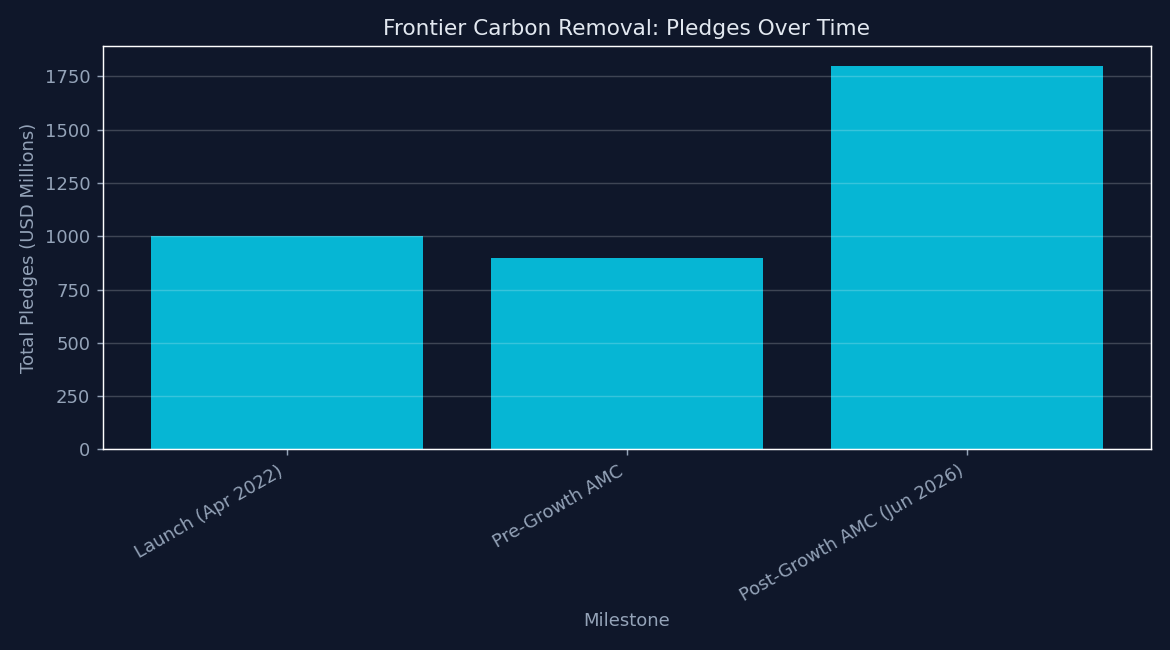
On June 17, 2026, Anthropic became the first pure AI startup to join Frontier, the advance market commitment (AMC) collective that pools corporate capital to purchase permanent carbon removal. The move contributed to a new $915 million funding tranche and nearly doubled Frontier’s total pledges to $1.8 billion. Google has been a founding member since Frontier launched in April 2022 alongside Stripe, Shopify, Meta, and McKinsey Sustainability. It took four years for a major AI lab to follow.
That gap is worth sitting with for a moment.
What Frontier Actually Does
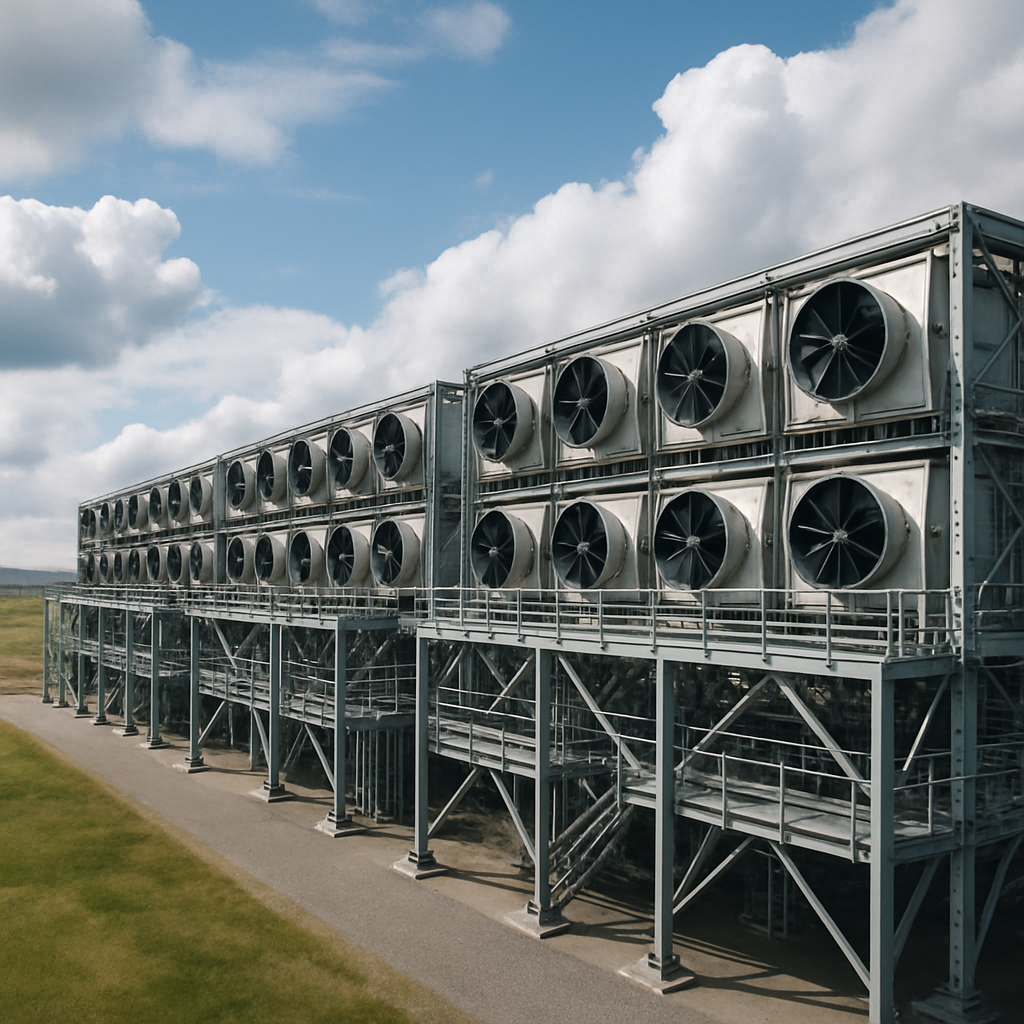
Frontier is not a charity. Member companies, including H&M Group and Salesforce alongside the new addition, pool capital to buy carbon removal credits from projects that physically pull CO2 out of the atmosphere. Technologies in the portfolio include direct air capture, enhanced rock weathering, bio-oil, ocean antacids, and bioenergy with carbon removal and sequestration. So far, Frontier has contracted nearly $700 million across more than 50 projects to remove 1.8 million tons of carbon.
The coalition is also pivoting its strategy. The new “Growth AMC” round concentrates on roughly 10 to 15 carefully selected partnerships backed by offtake contracts lasting eight to ten years, stretching to 2040. New contracts require that the carbon removal company “show a path to government subsidy/support,” Frontier told TechCrunch. The goal is to back projects capable of removing a gigaton of CO2 or more annually, not scatter funding across early-stage experiments.
The Credibility Gap
This is Anthropic’s first climate-related deal, ever. The company has no published sustainability report, no clean energy pledge, and no membership in the Corporate Energy Buyers Association. Neither Anthropic nor its rival OpenAI disclosed emissions data to the Foundation Model Transparency Index. In May 2026, Anthropic took over 300 MW of compute at xAI’s Memphis facility, a site powered almost entirely by natural gas.
Research published in 2025 estimated the carbon footprint of AI systems alone at between 32.6 and 79.7 million tons of CO2. Anthropic itself stated that “training a single frontier AI model will soon require gigawatts of power, and the US AI sector will need at least 50 GW of capacity over the next several years.” Joining Frontier does not offset that trajectory on its own.
Frontier head Hannah Bebbington Valori put it plainly: buying carbon removal from Frontier is not a “get out of jail free card,” since credits cost hundreds of dollars each, and the world spends far more on decarbonization than on removal.
A Meaningful First Step, Pending Follow-Through
There are reasons to read this charitably. In April 2026, Anthropic hired Chris Power, formerly of Amazon and Salesforce, as its new head of non-financial reporting and strategy. California’s SB 253 and EU mandatory disclosure rules are approaching, and Frontier membership signals at least some preparation. PitchBook analyst John MacDonagh called the news a sign of “genuinely positive signals” for a carbon removal market that had been rattled by reports of Microsoft slowing its buying.
The IPCC has said carbon removal will be necessary to reach net zero, and the broader market is responding: data from CDR.fyi puts total credit sales approaching $12 billion, up sharply from a few hundred million annually just four years ago. Microsoft alone accounts for roughly three-quarters of all engineered removal purchases to date, around 37 million credits. Anthropic’s entry adds a new class of buyer to a market that needs sustained demand, not just one dominant player.
The membership is a start. The sustainability report, the clean energy commitments, and the emissions disclosures are what come next. Until those exist, Frontier is a down payment on credibility, not a receipt for it.