Crystals Built for Science, Worn as Jewelry
Most gemstone shops source from mines or standard lab-grown producers. Gems of Science does something genuinely different. Their inventory comes from crystals originally grown for scientific, medical, and military applications. Radiation detectors. PET scanners. F-35 fighter jet sensor windows. When those crystals didn't meet industrial spec, most of them would sit in a pile somewhere collecting dust. Gems of Science steps in instead.
As they put it on their site: "Many beautiful materials were intended for science and medicine, but didn't quite make the cut. We upcycle them and they get a new life as gems."
How the Crystals Are Made (And Why They Glow)
To be clear: Gems of Science sources these crystals. They don't grow them. The growing is done by industrial photonics companies, government-funded labs, and specialty manufacturers. What Gems of Science does is identify these materials, acquire them, get them faceted, and introduce them to the gem market, often for the first time ever.
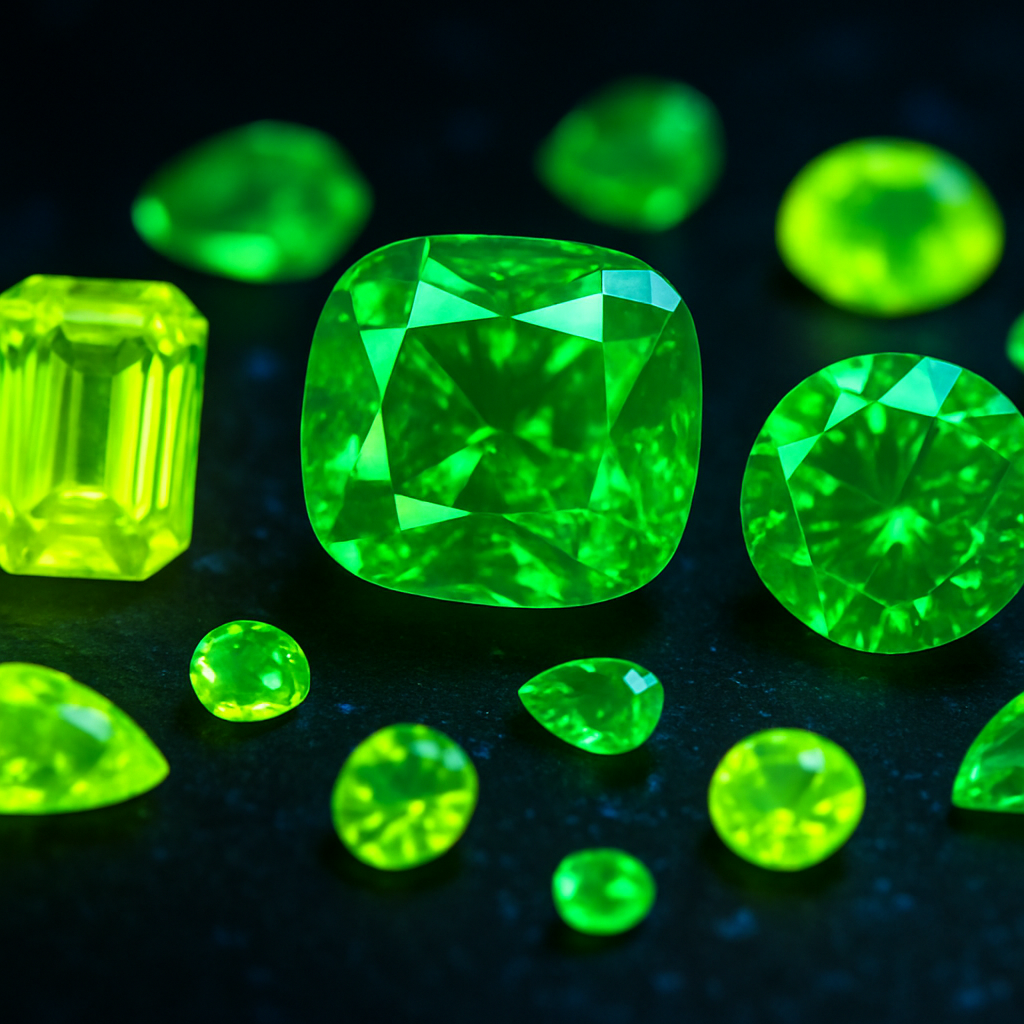
The star of their lineup is LuAG, or Lutetium Aluminum Garnet. LuAG has the same crystal structure as a natural garnet, but a composition that is flat-out impossible in nature. It was designed and grown starting in the late 1990s for use in PET scanners and other radiation-detecting devices. The reason it works for that? It's a scintillator: a crystal engineered to absorb invisible radiation and re-emit it as visible light.
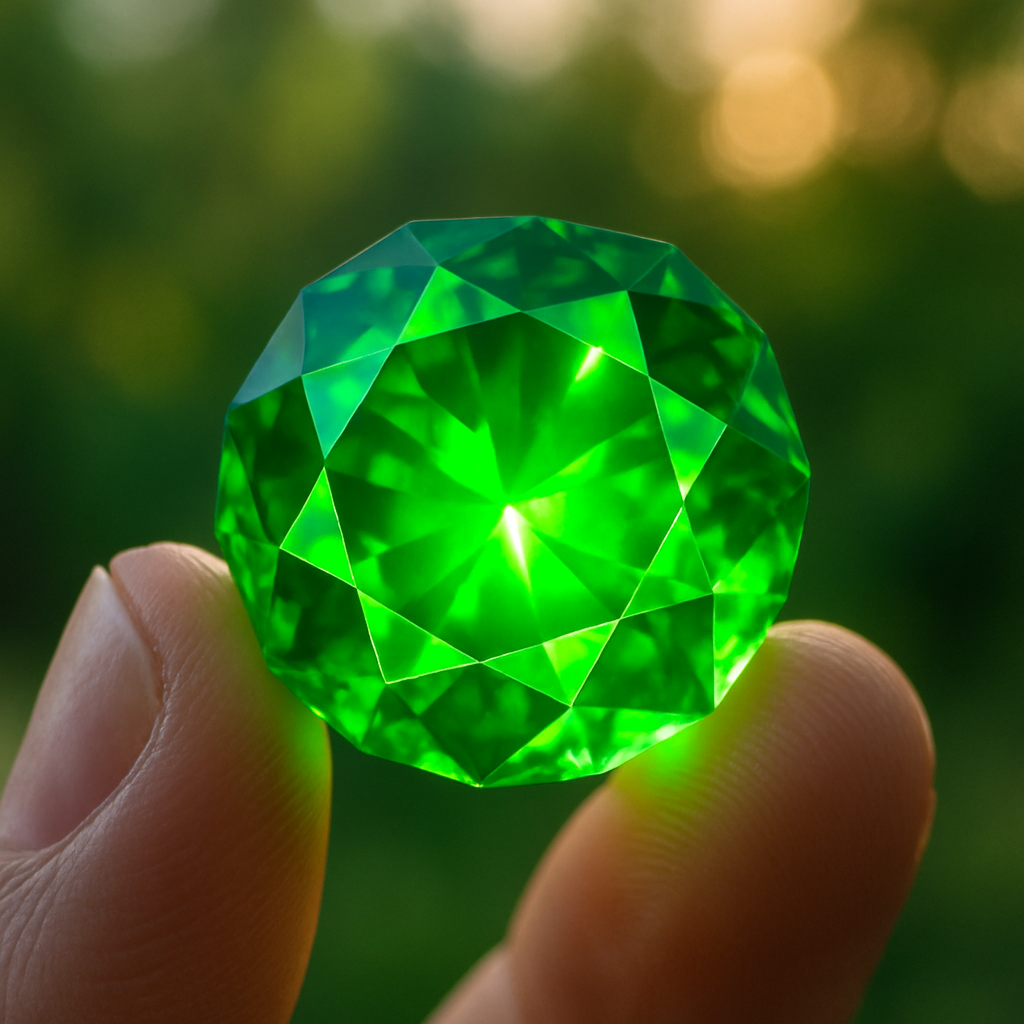
That same property makes it an extraordinary gem. LuAG fluoresces an intense neon green, and because the human eye is most sensitive to green, Gems of Science describes it as the brightest glow they have ever seen. Their own product listing notes that outdoors with indirect sunlight, a LuAG gem "can look like it is photoshopped into real life." It rates Mohs 8.5 in hardness, so it's durable enough for any jewelry setting. An "Extra Bright" variant, grown by one of the world's leading photonics companies, pushes the fluorescence to what Gems of Science calls "bonkers" levels. It runs slightly yellower in color than standard LuAG, but the glow is in a category of its own.
GAGG: The Accidental Glow-in-the-Dark Gem
GAGG, or Gadolinium Aluminum Gallium Garnet, is another scintillator crystal, this one used in PET and CAT scanners. Cerium GAGG only entered serious industrial use in 2014, and Gems of Science was the first to introduce it as a gem. It fluoresces a bright yellow, carries a Mohs 8 hardness, and has a refractive index of 1.9, which gives it excellent light performance.
Here's where it gets genuinely weird. Some GAGG crystals have a manufacturing defect that causes phosphorescence. After being charged under UV, they glow in the dark for hours. Crystal growers actively try to eliminate this property because afterglow makes the material useless as a radiation detector. But those rejected, defective crystals make stunning gems. Gems of Science calls the best of them "Firefly Garnet." GAGG is also paramagnetic, meaning you can pick it up with a rare-earth magnet.
F-35 Sapphires and a $5 Million Furnace
One of the wilder origin stories in the shop involves lab-created sapphires grown as sensor windows for the F-35 fighter jet. A company called Rubicon received a $5 million grant to develop the LANCE furnace, an ultra-high-tech crystal growing machine that produces the world's largest flat sapphires using what's called the "boat" method. Gems of Science got to visit the facility and meet the head crystal grower.
The furnace wasn't perfect. Over time, it accumulated a pile of rejects: crystals contaminated with titanium, bubbles, or fractures from the growth process. Those defects disqualify them from going anywhere near an F-35. They also make each stone unique. Some glow blue under 222nm shortwave UV due to titanium. They're now available as faceted loose gems at store.gemsofscience.com.
You Can Buy Them!
Gems of Science also partners with cutters like Eric at HouseOfSylas and Hedron Rockworks, who have faceted some of these lab crystals into dice alongside traditional gem cuts. They carry lumogarnets, hyperfluorescent GAGG pieces, facet rough for hobbyists, and calibrated gems for jewelers.
The materials are genuinely novel. Several of them have never appeared in the gem trade before Gems of Science brought them there.
Check them out at store.gemsofscience.com.
This post is not sponsored, not affiliated, and no compensation of any kind was received.